
Here is my dish washing system, which will surely evolve over the coming months. Hauling water is a hassle, so conserving is a high priority. If you have any advice, please chime in! Components: bread, spray bottle, squirt bottle, dish soap, 2 tubs, grey water bucket, rag or sponge

Step one, in finishing the meal use bread to wipe down the plates, then eat bread. C decided this must be the origin of the phrase “clean your plate”. If you don’t like bread, I suppose you could lick the dishes instead!
Step two, spray the dishes with greatly diluted dish soap immediately after the meal. So far this seems to be cutting any grease remarkably well while using very little water or soap.
Step three, while heating rinse water on the stove top, place relatively clean dishes in the small top tub. Place dirtier dishes, or any that are too large in the larger tub. They will not necessarily be soaking in any water unless there was previously leftover water in one or both of the tubs.
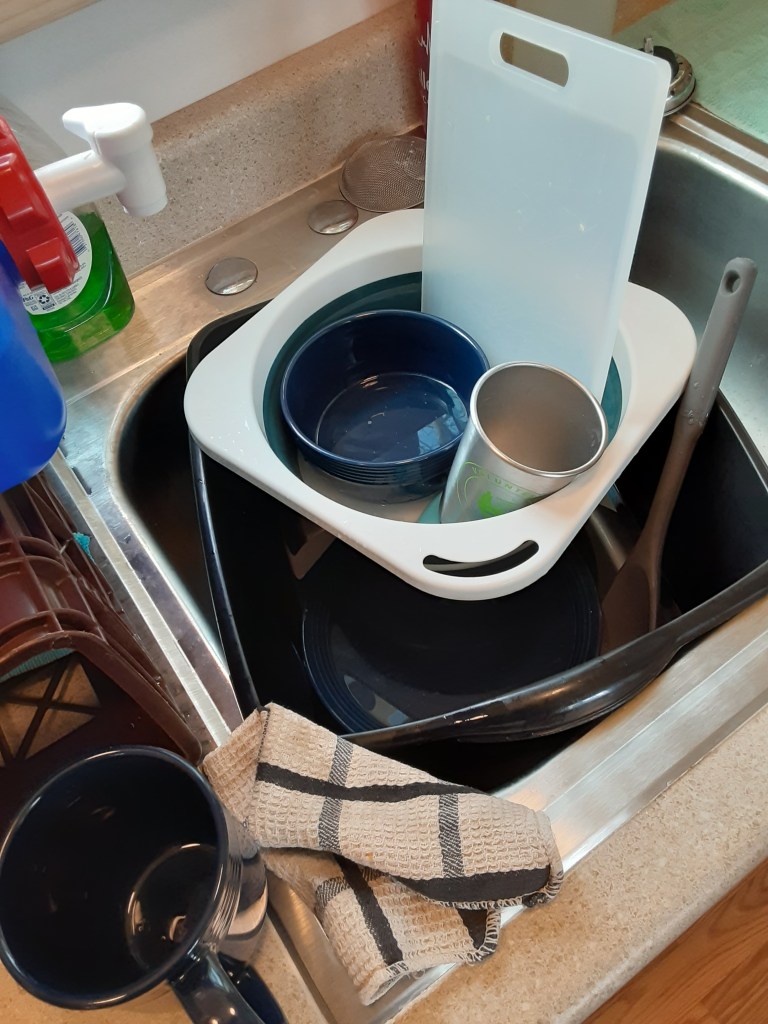
Step four, add heated water to squirt bottle and use to dampen rag or sponge. Use the rag to clean the least dirty dish in the bigger tub. If they are all pretty dirty and will need a soak, start with a dish from the smaller tub instead. If you need more soap on the dish you are cleaning, use the spray bottle. Once it is clean, rinse the dish using the squirt bottle. Direct the rinse water at the next dish you will wash, creating a little soapy wash water for the next dish.
The objective is to reuse every bit of water as much as possible before it is so dirty that it needs to go into the grey water bucket (mine is under the sink as the sink drains directly into a 5 gallon bucket). Each dish gets a nice rinse using a few squirts of hot water from the bottle. You want a squirt bottle that provides a little water pressure when you squeeze it, but that doesn’t use very much water per dish. I used less than a quart for the dishes in the foreground of the photo. Hopefully I will get better and faster with more practice.
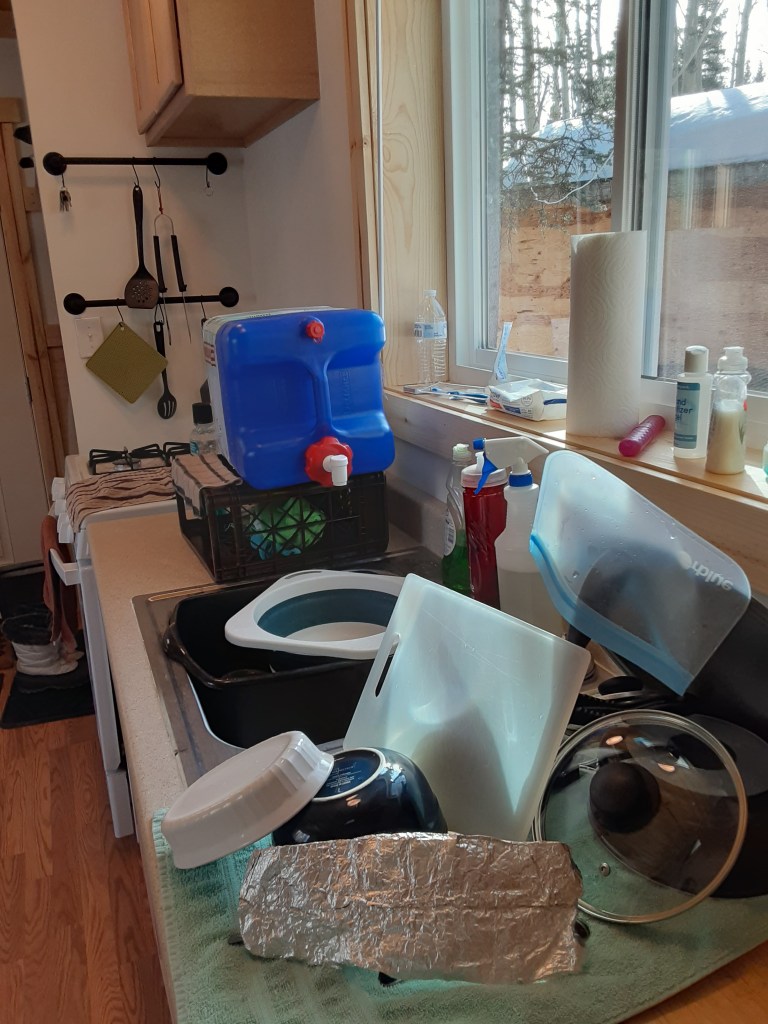
Note one: Thanks R, for your helpful hints! You will certainly recognize some of this system!
Note two: I no longer use the aquatainer tap at all while washing dishes. However I like the tap positioned over the tubs so that when I am washing produce the water can be reused for dishes.
Note three: I keep my relatively clean water in the little top tub, and my dirtier but usable water in the second tub. The water can sit in the tubs until I need it again. My tubs stack which is convenient with only one sink.


 Me & C
Leave a reply to shari yordy Cancel reply